





In short: in private equity, value today comes less from financial leverage and more from operational value creation. Whether it is buy-and-build, integration after closing or preparing for exit, every value creation plan needs a management team that can deliver it. This article looks at how funds organise value creation, which roles make the difference in portfolio companies, and why management tips the balance at exit at the latest.
Value creation instead of leverage
During the low-interest years, many investors grew used to the financial leverage of their investments; portfolio companies mainly had to perform steadily. Today, enterprise value is increased above all through value creation: innovation, cost management and digitalisation. We explain why the focus has shifted in Value creation instead of leverage.
The market is changing too. In the DACH region, less debt is flowing into buy-outs, the equity share and with it the responsibility is rising, and new investors are arriving in the form of wealthy individuals and family offices. For an overview, see 6 trends in private equity and Family offices as a new financial power.
When value creation becomes a leadership question
Typical moments in which leadership decides whether an investment succeeds:
- A new value creation plan after closing
- Buy-and-build and add-on acquisitions
- Integration after an acquisition
- A step up in growth or international expansion
- Preparing for exit
After an acquisition, the question soon arises whether the current management can deliver the value creation plan. Leadership gaps cost time during the holding period, and due diligence will expose them if nothing else does.
How funds organise value creation
Few topics are debated as intensely in private equity as how value creation in portfolio companies should be organised. The right model depends on the fund’s culture, strategy and resources, and the choice of model shapes which candidates are the right ones. We have described the most common approaches in a series of their own:
- The Operating Team model: the fund’s own operational team supports the portfolio companies.
- The Industrial Advisor model: experienced industry figures support value creation during the holding period.
- The combined model: for large transformations, the operations team works alongside a dedicated transformation team.
- The cradle-to-grave model: one deal team from due diligence to exit.
For an introduction to the topic, read Value creation in private equity. Whether leaders for operating teams need to be so specialised that they differ fundamentally from other managers is the question we discuss in The right candidates for Operating Teams.
The key roles in a portfolio company
CEO and managing directors
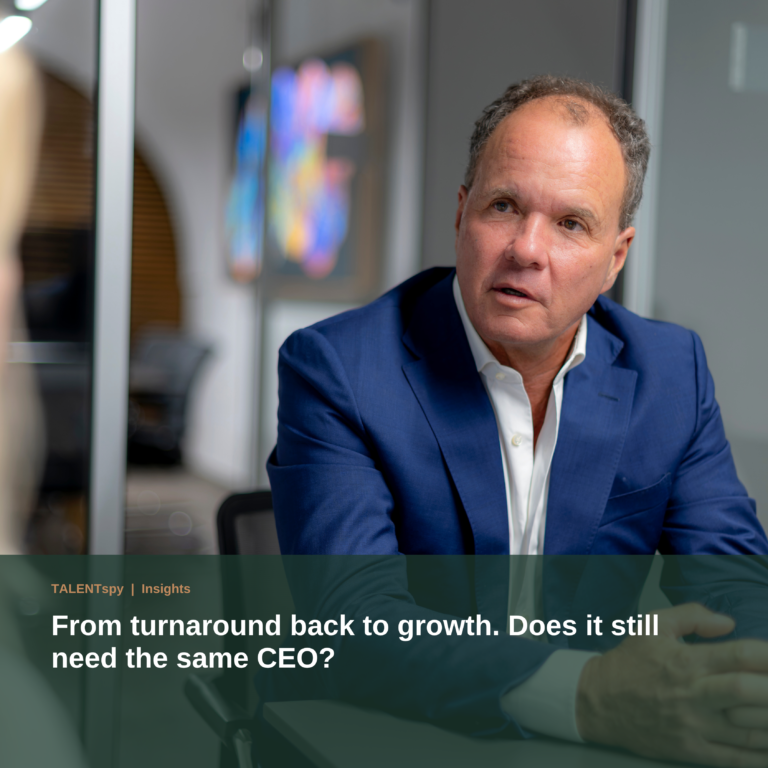
The leadership team carries the value creation plan. What you need are people who turn strategy, capital and data into real results, not just presentations. Why we look for character over perfect CVs is explained in our piece on personalities with edges. And why a growth phase after a turnaround often calls for different leadership is the subject of From turnaround back to growth.
CFO with private equity experience
The CFO of a portfolio company works with leverage, covenants and tight reporting cycles, and the role becomes especially demanding when the economy turns. Our series on what sets good private equity CFOs apart covers how to get on the search radar, costs, leverage and covenants and the profile ahead of exit.
Integration and PMI leads
After an acquisition, the first few months are decisive. Even high-calibre appointments fail when the role, mandate and expectations remain unclear after the merger. More in Why the best C-level appointments fail after post-merger integration.
Operating Partners, Value Creation Managers and Industrial Advisors
Depending on the fund’s model, you need Operating Partners and Operating Teams, Value Creation Managers, or Industrial Advisors and advisory board members who drive value creation from the investor’s perspective.
Common mistakes in portfolio appointments
Failed appointments in portfolio companies tend to have similar causes. These are the ones we see most often:
- The profile describes the past. Industry experience, span of control and track record are neatly written down, but the actual job of the next few years is not. This piece shows why that is one of the main reasons C-level appointments fail.
- Industry experience is overrated. Asking for fifteen years in the same sector narrows the market and can hold things back precisely where the business model needs to change (our view on industry DNA).
- The star from the network. A well-known CEO who succeeded elsewhere is not automatically the right fit for a mid-sized company at a critical stage. How expensive that can become is described in The wrong CEO costs you 12 months.
- Unclear priorities on the board. If candidates hear three different sets of priorities in three interviews, the best of them walk away, and not because of the salary (read more).
- A slow process. Long approval loops eat into the holding period and lose candidates. Many drop out before an offer is even made (50 per cent of candidates drop out, Speed is a leadership signal).
Leadership is the most critical variable in the exit equation
In a carve-out or a reorganisation, leadership is not a soft skill. Investment cases fail when the search is for standing rather than the ability to deliver; we call this the corporate illusion (our piece on hands-on leadership).
It becomes visible in the sale process at the latest. Buyers talk about multiples, markets and products, but in the end they ask one question: do I trust this team to deliver the plan? We have seen transactions in which the KPIs were clean and the valuation still fell (Your exit stands or falls with your management).
Exit readiness: management in the spotlight
Ahead of a sale, the focus shifts to reporting, the equity story and the stability of the management team. We set out which qualifications management needs in The management qualifications that really matter, and how to prepare a portfolio company for exit in Preparing your portfolio company for the best possible exit. A leadership assessment during due diligence or ahead of a sale shows early on where the team is strong and where it needs reinforcing.
Discreet appointments in private equity
Key roles in portfolio companies are generally not advertised. In our experience, more than 85 per cent of C-level vacancies in private equity are filled quietly; a public advertisement there is usually a sign of time pressure. How a discreet search works is described in In private equity, a public job ad is usually a sign of panic.
Frequently asked questions
Which roles does TALENTspy fill for portfolio companies?
CEO and managing directors, CFOs with private equity experience, heads of integration and PMI, Operating Partners and Operating Teams, Value Creation Managers, CFOs for exit readiness and the equity story, and Industrial Advisors and advisory board members.
Does TALENTspy also assess the existing management?
Yes. Through leadership assessment, we evaluate management during due diligence and ahead of a sale.
Does TALENTspy support management after the appointment?
Yes. We support the management team through the first 100 days and the transaction.
Who handles the assignment?
A partner, in confidence and directly. Never delegated.
Planning an acquisition, an integration or an exit and want to talk about management? Speak directly to a partner. For our view on restructuring and turnarounds, see Transformation.