
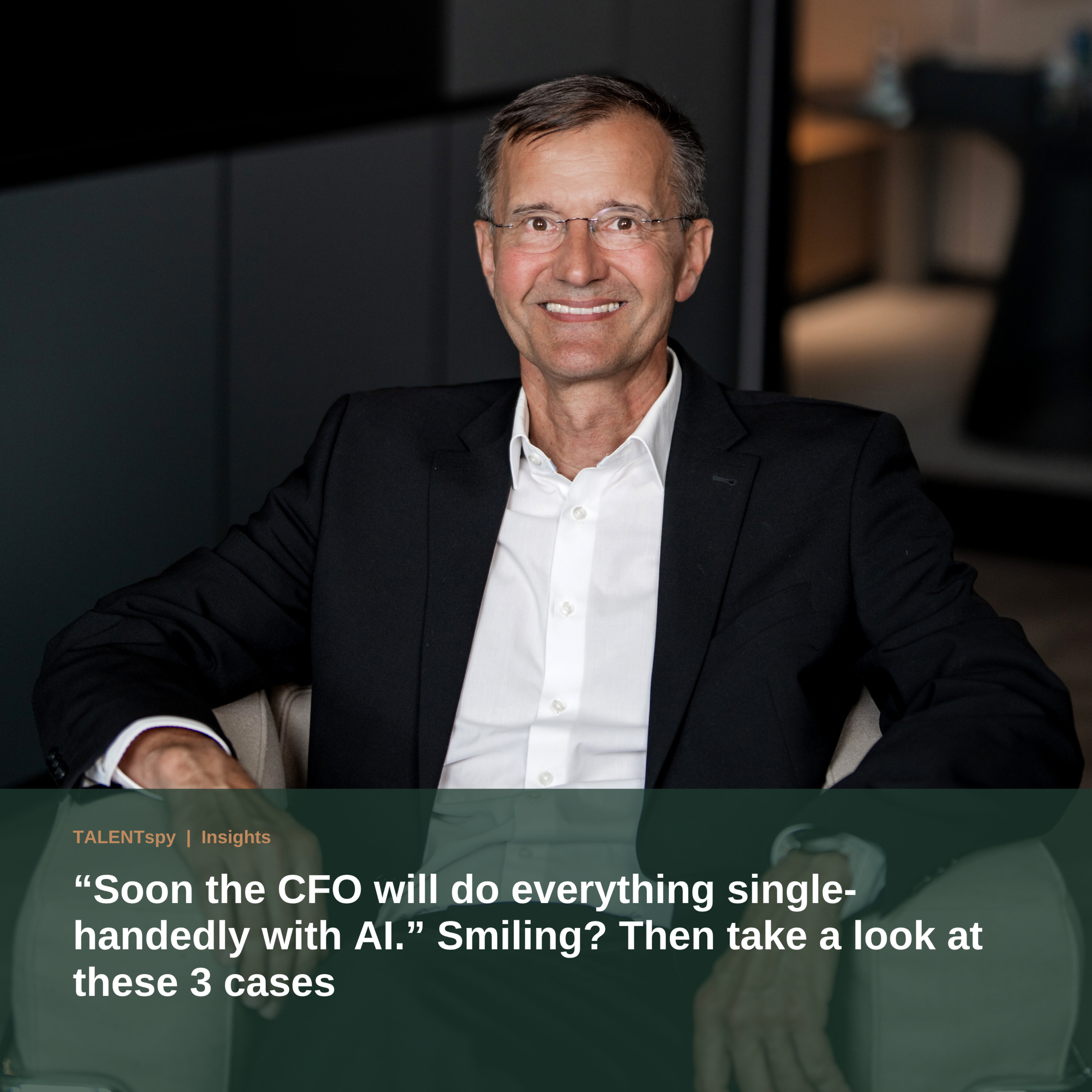
Imagine LinkedIn had existed in 1979. And someone had written: GRUNDIG insolvent in the foreseeable future, competitive advantages soon down to zero.
How would you have reacted? I recently read up on its story again. Incredible. It genuinely shook me. In 1979 I would have said: nonsense. A show-off.
And the CFO function, like other functions in a company, is exactly this kind of subjective impossibility.
The following documented cases show the direction of travel:
• The Big Four are investing billions to automate their own core business
• JP Morgan has rolled out its ‘LLM Suite’ to more than 140,000 employees
• Amazon, by its own account, is shrinking its white-collar workforce massively, including its finance functions
Try googling: Dukaan e-commerce or Blue Focus marketing, adding: replacement of employees by AI.
LinkedIn’s character limit and attention span do not allow me to go into more detail here. You can easily do that with ChatGPT & Co.
Of course the opening statement is exaggerated. Before you write it in the comments: Klarna has already backtracked.
There would also be serious drawbacks and risks:
⚠️ Breach of the four-eyes principle
⚠️ Audit and liability risks en masse
⚠️ Spurious precision
⚠️ Cognitive bottlenecks, absurd workloads and concentration risks
⚠️ Enormous dependence on individuals
⚠️ Destruction of the talent pipeline
But:
• it is already possible to say, function by function, how high the automation potential will be: accounting, controlling, financing, M&A and others (in decreasing order, incidentally).
And: companies with legacy systems that have grown over the years will find this harder than start-ups.
• since data consolidation and forecasts will be available in real time, the role will shift even further towards: scenario decision maker
• data architecture decisions will no longer be made in IT departments; the CFO needs to have the blueprints in their head
• orchestration skills will become a top issue: which systems and which outputs can you trust, and at what point does the human take over?
• data hygiene and interfaces will become enormously important and immediately a matter for the top
• detecting hallucinations and bias will become important
• relationship work with all stakeholders will become enormously important, wherever the human/machine interfaces sit, and these are constantly shifting at the moment
• all of this is also changing our work as executive search consultants, already now in the way we select and interview
In the end, you have to trust your ‘AI’ and stand by it. That is not always a walk in the park, especially in situations of uncertainty.
Note: the original German text was not written by AI; this English version is a translation. Please excuse any minor errors. The idea comes from interviews we conduct with investors, CEOs, CFOs and other stakeholders.
Why do even the best turnaround CEOs so often struggle with how the market sees them?
It is rarely about their numbers. Anyone who has run a P&L of €500m+, delivered 5 to 10 % in